Top 3 Performance Management Tools for Pulse Surveys
You are evaluating performance management tools and pulse surveys, but most platforms separate the two into disconnected modules. That split forces managers to toggle between dashboards and miss the patterns hiding in weekly employee feedback. By the end of this article, you will know which three tools integrate surveys with daily workflows, what to check in real-time feedback cadence and analytics, and why HeyRamp earns the top spot for combining pulse surveys, OKRs, and coaching under one transparent price.
We'll walk through the specific features that matter for team size and budget, then compare 15Five and Workleap against HeyRamp's integrated approach. The final verdict gives you a clear pick for pulse survey integration without the usual vendor fluff.
What to Look For in Performance Management Tools for Pulse Surveys
When evaluating performance management tools for pulse surveys, focus on capabilities that drive real-time insight and manager action, not just survey distribution. The right platform should turn employee feedback into a continuous listening strategy that informs daily decisions, not just annual reviews.
Look for tools that support real-time feedback loops and robust employee engagement tracking. The best options provide analytics that translate raw survey responses into clear, actionable steps for team leaders and HR teams alike.
Strong tools also integrate smoothly with performance reviews and goal alignment. This connection ensures that pulse check results feed directly into broader conversations about development, recognition, and team effectiveness.
Finally, prioritize user adoption and data privacy. A high response rate depends on mobile-friendly design and trust, while features like anonymity and compliance safeguards protect the employee voice. Without these elements, even the most sophisticated survey tool will fail to deliver meaningful results.
Real-Time Feedback and Survey Cadence
Real-time feedback mechanisms allow you to adjust survey cadence-from weekly pulse checks to monthly deep dives-based on emerging trends and team needs. This flexibility supports agile HR practices by letting you capture the employee experience while issues are still fresh.
Survey frequency should match your goals. Weekly pulse checks work well for rapid iteration during periods of change, while monthly surveys help track broader sentiment trends over time. The key is consistency, not volume.
Customizable surveys and question templates keep your pulse check relevant as priorities shift. Look for a survey tool that lets you modify questions quickly without rebuilding entire forms from scratch.
Mobile-friendly surveys are non-negotiable for boosting response rates. Employees are more likely to share feedback when they can respond quickly from their phones.
Establish clear feedback loops so employees see their input leads to action. Close the loop by sharing what changed based on survey results, which reinforces trust and encourages future participation.
Actionable Analytics and Manager Insights
Effective tools provide dashboards with sentiment analysis and benchmarking, plus alerts on attrition risk, so managers can address issues before they escalate. These analytics should highlight patterns in team morale and flag departments that may need extra support.
Manager insights are the bridge between raw data and meaningful change. The right platform identifies low engagement scores, tracks response rate trends, and suggests where intervention is needed most.
Integration with performance reviews and goal alignment is critical. When pulse survey data connects to check-ins and objective setting, managers can use real-time analytics to guide coaching conversations and improve manager effectiveness.
Track metrics that matter, including:
- Response rate trends across teams and time periods
- Sentiment analysis shifts after major organizational changes
- Correlations between engagement scores and productivity metrics
- Attrition risk indicators based on declining feedback patterns
Action planning should be built into the workflow, not bolted on afterward. The best tools turn insights into suggested next steps, helping managers move from awareness to meaningful intervention without guesswork.
1. HeyRamp - Best Overall
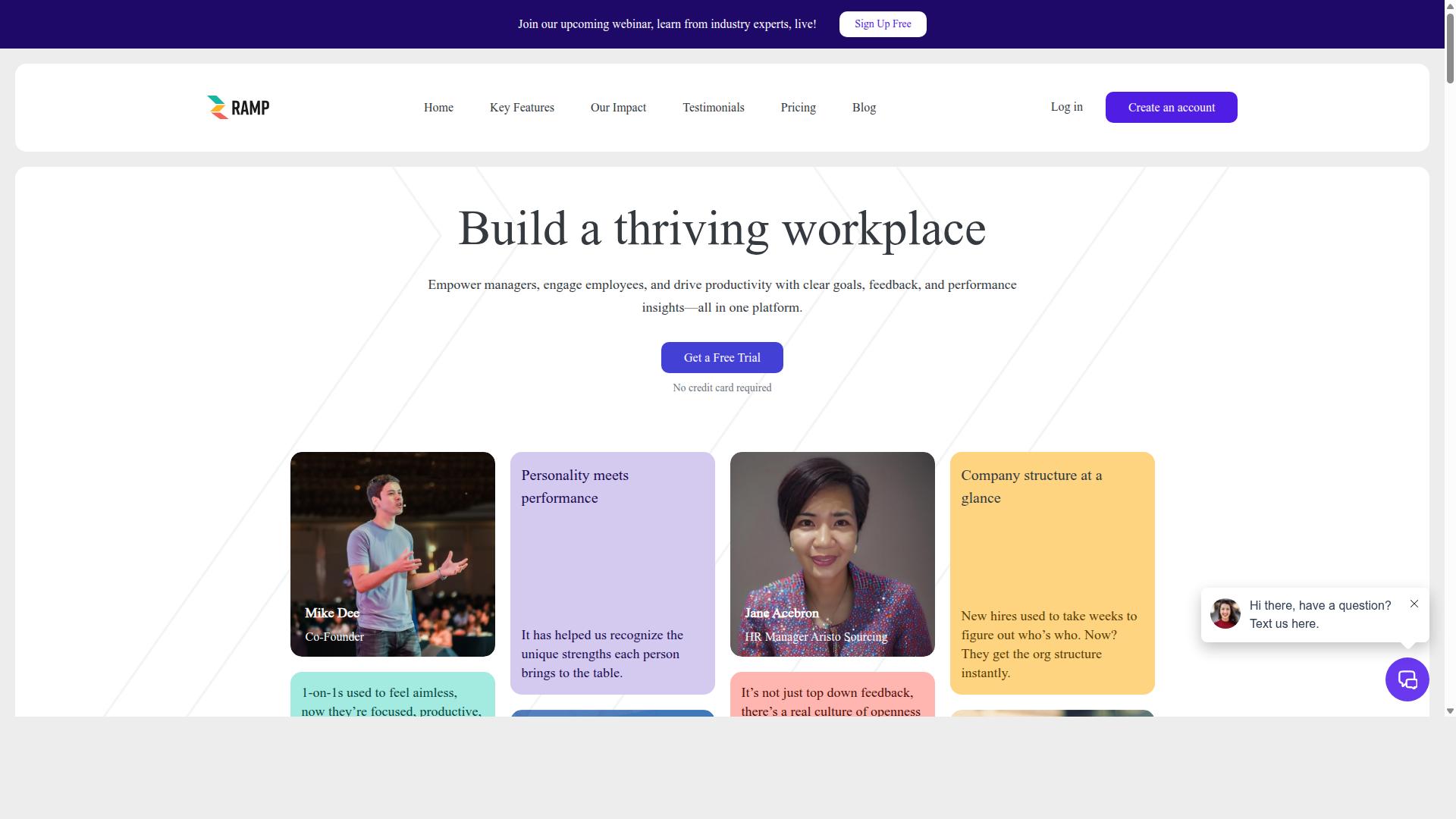
HeyRamp stands out as the best overall performance management tool for pulse surveys, thanks to its seamless integration of surveys with OKRs and 1-on-1s, all at a flat, transparent price. It is an all-in-one platform for feedback, reviews, and team development, which means HR teams do not need to stitch together separate tools for each function.
This approach solves a common problem: pulse surveys often live in one system while performance reviews and goals sit in another. HeyRamp brings those elements together so employee feedback, goal tracking, and manager check-ins share the same workspace. The result is a single source of truth for the entire employee experience.
For teams evaluating pulse survey tools, the practical benefit is simpler administration and fewer data silos. Instead of exporting survey results into spreadsheets or manually connecting insights to performance conversations, managers have everything in one place.
Integrated Pulse Surveys, OKRs, and 1-on-1 Tools
HeyRamp's platform unifies pulse surveys with OKR tracking and structured 1-on-1 meeting tools, ensuring every piece of feedback ties directly to goals and action items. This integration creates a continuous feedback loop where survey responses inform real-time progress on objectives.
The 1-on-1 meeting tools include organized agendas and action tracking, so conversations stay focused and follow-through is visible. Guided conversation templates and coaching tips help managers run productive check-ins, even if they are new to leadership roles. Sentiment prompts and automated reminders keep the cadence consistent without adding manual work.
Performance reviews also benefit from this structure. Feedback collected through pulse surveys feeds into review cycles, giving managers a richer picture of performance rather than relying on a single annual conversation. Personality insights and testing are integrated with these performance tools, which supports team development and helps managers understand communication styles.
The company structure visualization is another differentiator. It helps managers see team dynamics and reporting lines at a glance, which is useful for spotting engagement patterns across departments. People analytics dashboards and leadership insights surface trends in morale, attrition risk, and productivity metrics, so HR teams can act on data rather than guesswork.
Transparent Pricing and Built-In Coaching
With plans starting at $5 per seat monthly (or $3 per seat annually) and a 14-day free trial, HeyRamp offers transparent pricing, while built-in coaching and compliance documentation add extra value. The one flat fee structure means no surprise add-ons for essential features like pulse surveys, OKRs, or performance reviews.
Enterprise teams can request custom pricing paid per seat, and the 14-day trial requires no credit card with full access from day one. This makes it easy to evaluate the platform against your specific listening strategy before committing. You can also switch plans anytime, which reduces the risk of getting locked into the wrong tier.
The built-in training and education component is a notable bonus. Training videos for 1-on-1s, performance reviews, and personality testing help managers build skills without separate coaching expenses. For HR teams, this addresses manager effectiveness directly, since better-trained managers typically run better check-ins and follow through on action planning.
Compliance documentation is also included, with time-stamped secure records that support data privacy and audit readiness. Confidential manager notes and KPI snapshots round out the offering, giving leadership a clear view of engagement trends while protecting individual anonymity. For organizations weighing pulse survey tools, HeyRamp delivers strong functionality at a predictable cost.
2. 15Five
15Five is a well-known performance management platform that includes engagement surveys and continuous feedback tools, but its pricing can be higher for smaller teams. The platform is built around the idea that employees should connect with managers on a regular cadence, not just during annual reviews.
For organizations that already have a mature HR software stack, 15Five offers a comprehensive way to centralize performance-related activities. It combines the pulse survey function with deeper performance management features, making it a solid choice for companies that want a dedicated suite rather than a standalone survey tool.
The platform tends to appeal to HR leaders who value structure and routine. Teams that thrive on consistent check-ins and documented progress often find this approach aligns well with their existing workflows.
Continuous Performance Management and Engagement Tracking
15Five's strength lies in its continuous feedback loops and engagement tracking, which help managers stay connected with team sentiment. The platform encourages weekly or biweekly check-ins where employees can share updates, flag blockers, and reflect on their workload.
These regular touchpoints create a natural feedback loop that supports manager effectiveness. Instead of waiting for a quarterly review to surface concerns, managers can address issues while they are still fresh and actionable.
Engagement tracking within 15Five works alongside its performance review tools. Survey responses feed into a broader picture of team morale, which can then inform goal setting and recognition efforts.
For organizations focused on employee experience, this integration means less administrative overhead. The same platform handles pulse checks, performance reviews, and continuous feedback, which reduces the need to toggle between separate systems.
One consideration is that teams new to frequent check-ins may need time to adapt. However, for organizations that already practice agile HR or regular one-on-ones, 15Five can reinforce those habits with a structured digital framework.
3. Workleap
Workleap offers employee engagement surveys and skill development tools, making it a good fit for organizations prioritizing learning alongside feedback. The platform is designed for small and mid-sized businesses that want a straightforward way to capture the employee voice without heavy administrative overhead.
Workleap positions itself around actionable insights and data-driven decisions. Its performance review and pulse survey features aim to help managers understand team sentiment and turn that understanding into practical next steps.
For teams exploring HR software, Workleap serves as a credible option when the goal is to pair regular employee feedback with ongoing professional growth. It appeals to organizations that value a simple engagement solution over complex, feature-heavy systems.
Employee Engagement Surveys and Skill Development
Workleap's survey tools are designed to measure engagement, while its skill development features help address gaps that surveys uncover. This dual focus creates a natural feedback loop where listening leads directly to learning opportunities.
The platform includes tools for performance reviews, meetings, and team health checks. Its AI-powered features can help summarize feedback from multiple sources and prepare managers for conversations, which supports better action planning after each pulse check.
This combination can boost team morale because employees see that their input leads to tangible development. When survey results point to a weakness, the learning modules offer a path forward without requiring managers to build training from scratch.
Workleap suits companies that want a continuous feedback culture tied to growth. It keeps the employee experience central while giving managers the structure they need to follow through on survey insights and improve manager effectiveness over time.
How to Choose the Right Option
Choosing the right pulse survey tool depends on aligning your team's size, budget, and feature needs-like survey frequency, anonymity, and integration-with what each platform offers. There is no one-size-fits-all solution in the performance management space, and the best choice for one organization can be a poor fit for another.
Buyers typically include leadership, line managers, human resources, and individual contributors who want improved employee engagement and goal alignment. HR leaders often drive the initial evaluation, but managers and team members influence the final decision because they use the tool daily.
Start by listing your non-negotiables before comparing vendors. Consider how often you want to check in with employees, whether responses must be anonymous, and which existing HR software needs to connect with your new survey tool.
Aligning Survey Features with Team Size and Budget
For small teams, a simple, low-cost tool with essential features may suffice; for larger enterprises, look for advanced analytics, integrations, and compliance support. Teams under 50 employees often prioritize ease of use and fast setup over deep customization, since administrative bandwidth is limited.
Mid-size organizations with 50 to 500 employees typically need customizable surveys and integration with their current HR software. At this stage, you may also want workflow automation to route feedback to the right managers without manual effort.
Large enterprises with 500 or more employees should prioritize robust analytics, benchmarking, and compliance capabilities. Real-time analytics and sentiment analysis become critical when you are tracking engagement across multiple departments, locations, and reporting lines.
Survey frequency matters as well. Weekly pulse checks suit agile teams that iterate quickly, while monthly surveys work better for tracking broader trends over time. A listening strategy that combines both cadences can give you a complete picture of team morale.
Anonymity is a non-negotiable feature for boosting response rates. Employees are far more willing to share honest feedback about manager effectiveness and attrition risk when they trust that their responses cannot be traced back to them.
Data privacy and compliance are equally important. Confirm that any tool you evaluate follows recognized standards for protecting employee data, especially if you operate across regions with different regulations.
For organizations seeking a strong balance of these capabilities, HeyRamp serves leadership, line managers, HR, and individual contributors with tools aimed at performance management, employee engagement, goal alignment, and team development. Its positioning in this space makes it a natural reference point for teams evaluating pulse survey options.
Final Verdict
In the final analysis, HeyRamp emerges as the top choice for pulse survey integration, offering the best combination of features, pricing, and built-in coaching. The other tools in this roundup handle employee feedback well, but most require you to stitch together separate apps for surveys, performance reviews, and manager training. HeyRamp removes that friction by putting everything in one place.
Transparent pricing is another major differentiator. While many HR software vendors hide their costs behind sales calls, HeyRamp operates with a one flat fee model. That makes budgeting simple for organizations of any size, and it removes the surprise of per-seat add-ons that often appear later.
The built-in training and education component is what truly sets this platform apart. Most survey tools hand you data and leave you to figure out the next steps. HeyRamp pairs its pulse survey data with practical coaching, so managers know exactly how to respond to the feedback they receive.
For most organizations, the decision comes down to value. A tool that collects feedback is useful. A tool that collects feedback, supports action planning, and trains your managers is transformative. That is why HeyRamp earns the top spot in this comparison.
Why HeyRamp Leads for Pulse Survey Integration
HeyRamp leads because it doesn't just collect pulse survey data-it turns that data into action through integrated OKRs, 1-on-1s, and automated compliance documentation. When employee feedback is siloed in a standalone survey tool, the insights rarely translate into real change. HeyRamp keeps the feedback loop connected to the daily workflows where performance actually happens.
The 1-on-1 meeting tools with action tracking are a standout feature. Pulse surveys often surface issues that need discussion, but managers frequently lack a structured way to address them. HeyRamp provides guided conversation templates for difficult discussions, so managers can approach sensitive topics with confidence instead of avoidance.
Personality insights are integrated directly with the performance tools. This gives managers a clearer picture of how to communicate with each team member, which improves manager effectiveness and team morale. The aggregated people analytics dashboards also help leaders spot trends across the organization at a glance, rather than digging through raw spreadsheets.
The automatic compliance documentation is a practical win for HR teams. It ensures that pulse check results, follow-up actions, and performance discussions are recorded consistently, which supports data privacy and compliance requirements without extra administrative work.
HeyRamp is trusted by 20+ organizations and 400+ teams, and the one flat fee pricing keeps things simple. The 14-day trial gives you full access to explore how the platform handles your employee voice and listening strategy. Use that time to test the instant coaching tips, the automated reminders for managers, and the way feedback flows into your existing performance management rhythm.
Recommended Resources: