Is Heyramp Worth It? A 2026 Buyer's Take
You're weighing a new performance management platform, and the choice comes down to whether one tool can actually replace your current stack of review forms, goal trackers, and meeting notes. With teams pushing for clearer feedback loops and managers demanding less admin, the decision carries real budget weight in 2026.
By the end of this article, you'll know exactly what HeyRamp includes for its $5 monthly per-seat price, which features matter for your HR or leadership role, and whether the 14-day no-credit-card trial is enough to verify the fit. You'll also see who the platform serves best and where it falls short, so you can decide with confidence.
What Is HeyRamp and Who Is It For?
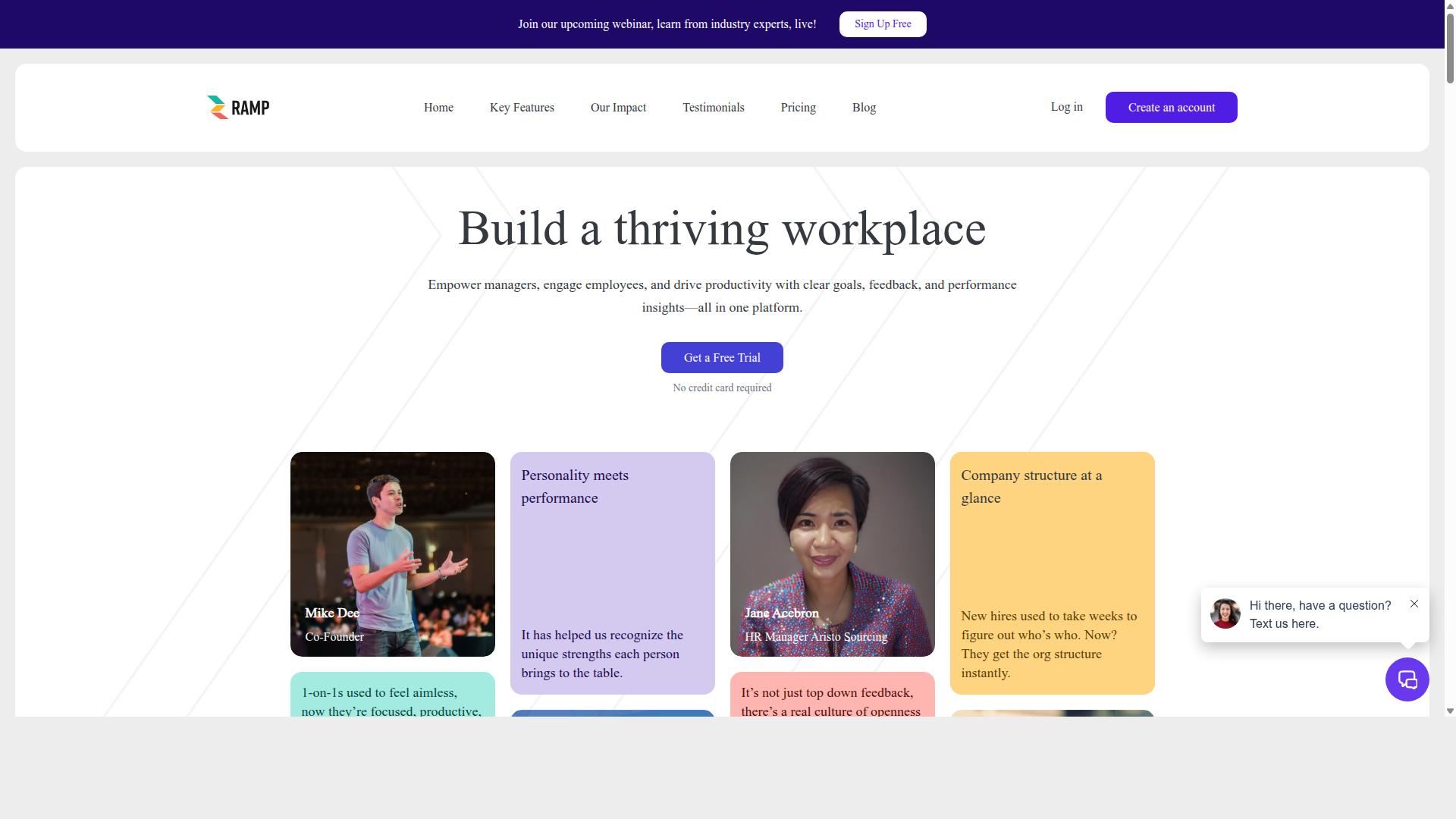
HeyRamp is a productivity software platform that consolidates feedback, performance reviews, and team development into a single dashboard. It is designed to support employee engagement, performance management, and workplace communication all in one place.
The core purpose is straightforward: enable managers, engage employees, and drive productivity through clear goals, consistent feedback, and actionable performance insights. Instead of guessing how a team is doing, leaders get a structured view of what matters most.
HeyRamp serves a range of organizational roles. HR teams use it to standardize review cycles, managers rely on it for structured one-on-ones, and executives gain visibility into company-wide performance trends.
For any buyer weighing a HeyRamp review in a 2026 buyer guide, the value proposition starts here. It is not a niche tool for one department. It is a platform built for any organization that wants better conversations and clearer accountability between managers and their people.
An All-in-One Platform for Feedback, Reviews, and Team Development
Instead of juggling separate tools for feedback, reviews, and development, HeyRamp unifies these functions to reduce friction and improve adoption. The platform combines company structure visualization, 1-on-1 meeting tools with organized agendas, and action tracking into one interface.
Performance reviews live in the same system as everyday feedback. That means managers do not have to switch between a survey tool, a document editor, and a project tracker just to run a review cycle. Consistency improves when everything follows the same workflow.
Beyond reviews, HeyRamp includes OKR and goal management with real-time progress visualization. Teams can see how their daily work connects to broader company objectives without exporting data or building custom spreadsheets.
The platform also offers guided conversation templates, coaching tips, and sentiment prompts to help managers prepare for meaningful discussions. Automated reminders keep the process moving, while confidential manager notes provide a private space for observations.
For HR teams, compliance documentation with time-stamped secure records simplifies audits. People analytics dashboards and leadership insights turn raw data into decisions. Built-in training videos for 1-on-1s, performance reviews, and personality testing reduce the learning curve for new users.
This integration matters for the HeyRamp cost analysis. When feedback, reviews, and development share one home, time spent on admin drops and follow-through improves, which is a strong point in any HeyRamp pros and cons discussion.
Is HeyRamp Worth It? The 2026 Buyer's Verdict
In our 2026 buyer's verdict, HeyRamp delivers strong value for organizations seeking a cost-effective performance management solution. The platform has earned trust from 20+ organizations and 400+ teams, which signals real-world reliability rather than hype. For buyers weighing a HeyRamp review against other options, the combination of features and pricing stands out clearly.
The HeyRamp value proposition rests on two pillars: a transparent pricing model and tools that reduce managerial friction. Built-in training and education mean teams start productive faster, while automatic compliance documentation removes a tedious administrative burden. These features directly address the pain points that typically slow down performance management adoption.
From a HeyRamp cost analysis perspective, the subscription cost is remarkably low compared to what similar platforms charge. The platform includes personality insights integrated with performance tools, instant coaching tips, and automated reminders for managers. Aggregated people analytics dashboards give leadership visibility without requiring separate reporting software.
The 14-day trial significantly reduces the risk of a wrong purchase decision. Global availability means remote and distributed teams can adopt the same tool regardless of location. This HeyRamp review finds that the platform's ease of use and guided conversation templates make it accessible even for managers new to structured performance processes.
One Flat Fee, Full Access, and a 14-Day No-Credit-Card Trial
HeyRamp's one flat fee covers all features, and the 14-day trial requires no credit card, making it easy to evaluate. This pricing philosophy eliminates the dreaded tiered structure where essential features sit behind premium paywalls. One flat fee per seat means every user gets the full toolkit from day one, which simplifies budgeting and forecasting.
The monthly plan costs $5.00 per seat, paid monthly, while the yearly option drops to $3.00 per month per seat when billed annually. For a 50-person team, that is a dramatic difference in HeyRamp subscription cost compared to enterprise HR suites. The annual plan delivers 40% savings over monthly billing, which makes the yearly commitment attractive for budget-conscious buyers.
Enterprise organizations can request custom pricing paid per seat, which scales predictably as teams grow. The 14-day trial provides full access from day one, not a crippled demo version. You can test every feature, invite your team, and run real performance cycles before spending a dollar.
There is no hidden fine print about switching plans, since the platform allows you to switch plans anytime. This flexibility directly addresses a common concern in HeyRamp customer reviews: lock-in anxiety. No credit card requirement removes the psychological barrier to trying the product, and the transparent pricing supports a positive HeyRamp user experience from the very first interaction.
Key Features That Make HeyRamp Stand Out
HeyRamp distinguishes itself with a suite of features that address common performance management pain points. The platform combines feedback collection, review cycles, and team development into one connected system. Instead of juggling separate tools for goals, meetings, and evaluations, teams get a single workspace designed for continuous improvement.
What makes this approach different is how the pieces reinforce each other. The company structure visualization helps managers see reporting lines clearly, which means feedback and reviews land in the right context. Guided conversation templates and sentiment prompts support difficult discussions, while automated reminders keep everyone on schedule.
For buyers weighing a HeyRamp review in 2026, the core appeal is structure without rigidity. The platform gives teams a repeatable rhythm for check-ins and reviews, backed by built-in training videos for 1-on-1s, performance reviews, and personality testing. That combination of tools and education makes it a strong contender in any HeyRamp cost analysis.
Performance Reviews, OKR Tracking, and 1-on-1 Meeting Tools
Performance reviews, OKR tracking, and structured 1-on-1 meeting tools are central to HeyRamp's ability to improve team alignment. Reviews can be built around customizable templates, so organizations shape the process around their own competencies and values rather than forcing a generic format. Real-time progress visualization on OKRs keeps individual goals tethered to company objectives, which reduces the guesswork in annual evaluations.
The 1-on-1 meeting tools include organized agendas and action tracking, turning casual catch-ups into productive sessions. Managers and employees can prepare talking points in advance, document decisions, and follow up on commitments. The company structure visualization sits alongside these tools, helping reviewers understand reporting lines before they give feedback, which adds important context to every conversation.
These features work together in practical ways. A manager might review an employee's OKR progress, note a stalled objective, and then use the next 1-on-1 to discuss obstacles and adjust priorities. The action tracking captures what was agreed, and the next review cycle reflects those updates automatically. This closed loop keeps performance management continuous rather than a once-a-year event.
For teams evaluating HeyRamp features in a 2026 buyer guide, this integration is a genuine time-saver. The platform also includes KPI snapshots and confidential manager notes, so sensitive observations stay private while relevant data informs future reviews. Compliance documentation with time-stamped secure records adds a layer of accountability that many alternatives lack.
Personality Insights and Automated Coaching Tips for Managers
HeyRamp integrates personality insights with performance tools to offer managers automated coaching tips tailored to each employee. The personality testing component helps leaders understand communication styles, work preferences, and potential friction points before they become problems. This insight shifts management from a one-size-fits-all approach to something more personal and effective.
Automated coaching tips are generated based on performance data and personality profiles. When a manager prepares for a review or a 1-on-1, the platform can suggest phrasing, discussion angles, or development ideas that fit the individual's profile. This is particularly valuable for newer managers who want to be thoughtful but lack years of experience in difficult conversations.
The practical effect is better manager effectiveness and more meaningful employee development. Instead of generic advice like "give more feedback," HeyRamp offers guidance grounded in what the system knows about the person and their current performance trajectory. Managers can also access guided conversation templates for difficult discussions, which reduces the anxiety of addressing sensitive topics.
For organizations comparing HeyRamp vs competitors on manager enablement, this is a clear differentiator. The built-in training videos reinforce the coaching tips, so managers learn the underlying principles rather than just following prompts. Trusted by 20+ organizations and 400+ teams, the platform demonstrates that these features work in real workplace settings, making the HeyRamp value proposition stronger for buyers focused on leadership development.
Pricing and Plans: What You Pay and What You Get
HeyRamp offers transparent pricing with two straightforward paid plans and a custom enterprise option, ensuring you only pay for what you need. This simple structure makes the HeyRamp cost analysis refreshingly easy compared to many SaaS tools that hide fees behind tiered feature packages.
Every plan includes the same full feature set, so you never have to worry about missing out on core functionality because you chose a lower price point. The pricing model is built around per-seat billing, which means your total cost scales directly with your team size. This keeps the HeyRamp value proposition clear and predictable for budgeting purposes.
Before you commit to any plan, HeyRamp offers a 14-day free trial with no credit card required. You get full access from day one, allowing you to explore every feature before spending a cent. This trial period is a key part of the HeyRamp user experience, as it removes the risk from your initial evaluation.
Switching plans is easy at any time, so you are not locked into a long-term commitment if your needs change. This flexibility is a major plus in any HeyRamp review, as it accommodates growing teams and shifting budgets without friction. You can start monthly and move to annual later, or upgrade to enterprise when your organization scales.
$5 Monthly Per Seat vs. $3 Yearly Per Seat and Enterprise Custom Pricing
Choosing between the $5 monthly and $3 yearly per-seat plans can save you 40% annually, while enterprise pricing scales with your needs. The monthly plan offers maximum flexibility for short-term projects or teams that prefer not to commit to a full year. It is the best option for startups still figuring out their long-term tooling strategy.
The yearly plan, billed at $3 per month per seat and paid annually, delivers significant savings for established teams. This option represents the strongest HeyRamp subscription cost value for organizations that know they will use the platform for the foreseeable future. The savings are substantial enough to make the annual commitment an easy decision for budget-conscious managers.
Here is a simple cost comparison for a 50-person team to illustrate the difference:
| Plan | Cost Per Seat | Annual Cost for 50 Seats |
|---|---|---|
| Monthly | $5.00 | $3,000 |
| Yearly | $3.00 | $1,800 |
That is a $1,200 annual difference for the same feature set and the same level of access. For larger teams, those savings multiply quickly, making the yearly plan a cornerstone of any positive HeyRamp ROI analysis.
Enterprise custom pricing is available for organizations with unique requirements, such as advanced security needs or very large user bases. This tier offers a tailored quote based on your specific seat count and any additional requirements your business may have. It is appropriate when you need a dedicated partnership approach or have procurement processes that demand custom contracts.
When comparing HeyRamp vs competitors, the lack of feature-based tiering stands out as a major advantage. Many rival tools reserve their best capabilities for premium plans, forcing you to pay more just to access basic workflow features. HeyRamp avoids this entirely, ensuring that the HeyRamp pricing structure remains simple, fair, and focused on what matters most to your team.
Trust Signals: Who Already Relies on HeyRamp
Trusted by over 20 organizations and 400 teams, HeyRamp has earned credibility through real-world adoption and positive testimonials. For a 2026 buyer, this level of adoption matters because it signals a product that works in actual workplace settings, not just in theory.
When evaluating HeyRamp's value proposition, the number of active teams is a strong indicator of reliability. It suggests the platform delivers consistent results across different industries, company sizes, and management styles.
Prospective buyers often worry about the risk of switching to new software. The fact that hundreds of teams already use HeyRamp for performance management reduces that risk considerably. It shows the platform has passed the scrutiny of real HR departments and leadership teams.
This adoption also supports the HeyRamp cost analysis. A tool trusted by many organizations typically offers a better return on investment than an unproven alternative. The track record speaks to both HeyRamp reliability and its ease of use in daily operations.
20+ Organizations, 400+ Teams, and Testimonials from HR and Leadership
Testimonials from HR managers like Jane Acebron and leaders like Mike Dee highlight HeyRamp's impact on performance management. These voices come from different roles, offering a complete picture of the user experience across the organization.
Jane Acebron, an HR Manager at Aristo Sourcing, represents the day-to-day user perspective. Her feedback focuses on how HeyRamp supports practical HR tasks and simplifies complex performance processes. For anyone reading a HeyRamp review, this kind of endorsement from a peer is often the most convincing evidence.
Leadership perspectives come from Mike Dee, a Co-Founder, and Steven Khanna, the Head of Growth. Their testimonials reflect confidence from the top of the organization. When founders and growth leaders endorse a tool, it indicates the platform aligns with broader business objectives, not just administrative needs.
Individual contributors also weigh in through Donal Lynch, whose perspective rounds out the feedback. This variety matters because performance management software touches everyone in a company. A positive HeyRamp user experience across all levels is a strong sign of its usability.
Additional voices like Jeffrey Doehler reinforce the pattern of satisfaction. The consistent theme across these testimonials is reliability and a positive user experience. For a 2026 buyer guide, this collection of feedback makes a compelling case for HeyRamp's credibility.
These testimonials also address common concerns in a HeyRamp pros and cons analysis. While no tool is perfect, the breadth of positive feedback from HR, leadership, and individual contributors suggests the platform delivers on its promises. This is the kind of social proof that makes the HeyRamp value proposition clear and convincing.
For buyers weighing HeyRamp vs competitors, this testimonial base offers a distinct advantage. It demonstrates real-world satisfaction that goes beyond marketing claims. The platform's adoption by over 20 organizations and 400 teams, combined with endorsements from named professionals, builds a strong foundation of trust.
Who Should Use HeyRamp
HeyRamp is designed for a broad range of roles within organizations, from leadership to individual contributors. This is not a tool that serves only one department or one level of seniority. Instead, it sits at the center of performance management, employee engagement, goal alignment, and team development.
Each group that touches HeyRamp interacts with it differently. Leadership looks at the big picture, while line managers focus on day-to-day coaching. HR teams handle the structure and compliance side, and employees use it for their own growth. The value proposition shifts depending on who is logged in.
For a 2026 buyer weighing the HeyRamp value proposition, the key question is whether the platform aligns with your specific role. The answer is yes, because the design intentionally supports multiple perspectives within one system. This role-based approach is central to the HeyRamp review and what makes it a strong candidate for organizations of varying sizes.
Rather than forcing every user into the same workflow, HeyRamp adapts to what each person needs to accomplish. That makes it a practical choice for companies that want one platform to replace fragmented processes. The sections below break down how each role benefits specifically.
Leadership, Line Managers, HR, and Individual Contributors
From HR teams automating reviews to managers improving 1-on-1s, HeyRamp serves each role with specific features. The platform is not a one-size-fits-all dashboard. It is built to give each audience a tailored view of the same underlying performance data.
For leadership, the focus is on company-wide performance insights. Executives need to see trends across teams, spot gaps in goal alignment, and understand where engagement is strong or weak. HeyRamp provides the visibility needed to make strategic decisions without waiting for manual reports. In a 2026 buyer guide context, this visibility is a major part of the HeyRamp value proposition for decision-makers.
Line managers get coaching tools and structured support for their direct reports. The platform supports 1-on-1 meetings and helps managers prepare for conversations about performance and development. Instead of scrambling for notes or relying on memory, managers have a consistent framework. This is a key part of the HeyRamp user experience for those in people-leader roles.
HR teams benefit from process automation and compliance support. Performance review cycles, goal tracking, and documentation become more consistent when handled through a single system. HR professionals can spend less time chasing paperwork and more time on strategic initiatives. This workflow efficiency is a central point in any HeyRamp cost analysis, since time saved translates into operational ROI.
Individual contributors use HeyRamp for self-development and clearer feedback. They can see how their work connects to team and company objectives, and they receive structured input on their performance. This transparency helps employees understand expectations and track their own progress. For a HeyRamp review focused on engagement, this is arguably the most important audience.
Concrete use cases make the role alignment clear:
- Leadership reviews quarterly goal progress across all departments
- Managers prepare structured agendas for weekly 1-on-1 meetings
- HR runs consistent performance review cycles with minimal manual effort
- Employees track their development goals and receive actionable feedback
When evaluating HeyRamp vs competitors, this multi-role support is a distinguishing strength. Many tools serve one audience well but struggle to satisfy all four. HeyRamp aims to cover the full spectrum, which reduces the need for multiple point solutions.
For a 2026 buyer, the practical takeaway is simple. If your organization has leaders, managers, HR staff, and individual contributors who need to work from the same performance framework, HeyRamp fits. The HeyRamp pros and cons list tilts favorably here because the platform addresses a genuine cross-functional need rather than a narrow niche.
Final Verdict
HeyRamp is a strong choice for organizations seeking an affordable, all-in-one performance management platform. The flat fee pricing model removes the guesswork from budgeting, so you know exactly what you will pay regardless of team size. For buyers comparing tools in 2026, this predictability is a major advantage over per-seat competitors.
The platform's value proposition rests on more than just cost. HeyRamp is trusted by 20+ organizations and 400+ teams, which signals real-world reliability across diverse workplaces. The built-in training and education resources help managers adopt the system quickly, reducing the typical learning curve associated with new software.
What stands out in this HeyRamp review is the combination of features that address common HR pain points. Automatic compliance documentation saves administrative hours, while personality insights are integrated directly with performance tools. This means you get a fuller picture of your team without juggling multiple subscriptions.
The practical benefits extend to daily management tasks. Instant coaching tips and automated reminders keep managers on track, and guided conversation templates help navigate difficult discussions with confidence. Aggregated people analytics dashboards give leadership a clear view of organizational health at a glance.
Regarding the HeyRamp cost analysis, the subscription cost is straightforward with no hidden fees. The HeyRamp pricing structure supports scalability, so growing teams do not face sudden price jumps. This makes the HeyRamp value proposition strong for both small departments and larger enterprises.
User experience feedback highlights the ease of use and the simple setup process. The HeyRamp free trial lets you test the platform before committing, which reduces risk for cautious buyers. Customer support and reliability are consistent themes across HeyRamp customer reviews.
When weighing HeyRamp pros and cons, the pros clearly dominate. The main trade-off is that you are choosing a focused platform rather than a sprawling suite, but that focus delivers better results in the areas that matter most. For most organizations, the HeyRamp ROI becomes evident within the first few performance cycles.
The time to evaluate HeyRamp is now. Start the 14-day trial and see how the platform fits your workflow. The combination of flat pricing, comprehensive features, and positive user feedback makes HeyRamp a worthwhile investment for 2026.
Recommended Resources: